No parent wants to expose their child to harmful chemicals. But the consumer products market for babies and children is not adequately regulated for chemical safety in the United States. Flame retardants, endocrine disruptors, and undisclosed fragrance chemicals appear in products marketed specifically to the most vulnerable population.
This guide covers the highest-risk product categories and gives practical, prioritized guidance on safer alternatives. We cite research from the National Institute of Environmental Health Sciences and established consumer safety organizations.
Why Babies Are More Vulnerable
Children are not small adults when it comes to chemical exposure. Their vulnerability is compounded by several factors:
- Developmental windows: The brain, endocrine system, and immune system are still forming during infancy and early childhood. Chemical disruption during these windows can have long-term effects that wouldn't occur in adults.
- Higher dose per body weight: Infants breathe more air per pound of body weight than adults, increasing inhalation exposure to airborne chemicals.
- Closer contact with surfaces: Babies spend more time on floors and surfaces where dust (which accumulates flame retardants and other chemicals) concentrates.
- Hand-to-mouth behavior: Infants and toddlers regularly put objects in their mouths — a direct ingestion route for chemicals on surfaces and products.
Crib Mattress — Highest Priority
Your baby sleeps 12-16 hours per day on their mattress. The flame retardant and off-gassing concerns from conventional mattresses are covered in our non-toxic mattress guide — they're even more critical for infants.
What to buy: Naturepedic Organic Baby Mattress — GOTS and GREENGUARD Gold certified, no polyurethane foam, no chemical flame retardants. Uses organic cotton batting and meets flammability standards through material design.
Baby Bottles and Feeding Equipment
BPA (bisphenol A) was banned from baby bottles in 2012 — but "BPA-free" plastics often use BPS or other bisphenol alternatives with similar endocrine-disrupting activity. Plastic bottles also shed microplastics when shaken or heated.
What to buy: Borosilicate glass bottles (Lifefactory, Dr. Brown's glass) or stainless steel (Pura, Klean Kanteen infant). Glass is the clearest-cut safe choice. If using plastic, choose polypropylene (#5) — it's generally considered the least concerning plastic for food contact.
Baby Skincare and Shampoo
Baby skincare products are applied to skin that is more permeable and covers a proportionally larger body surface area than adult skin. The chemicals in these products matter. Key ingredients to avoid:
- Parabens (methylparaben, propylparaben): Preservatives with weak estrogenic activity. Found in many baby lotions and shampoos.
- Synthetic fragrance: "Fragrance" on an ingredient label can represent dozens of undisclosed chemicals, including phthalates (endocrine disruptors) used as fragrance fixatives.
- Formaldehyde-releasing preservatives (DMDM hydantoin, quaternium-15): Found in some baby shampoos and classified as known or probable carcinogens by the American Cancer Society.
The Honest Company baby skincare line avoids these ingredients and rates well on the EWG Skin Deep database. California Baby and Burt's Bees Baby are also reasonable options. Check any product using our EWG Skin Deep guide.
Car Seats and Bouncers
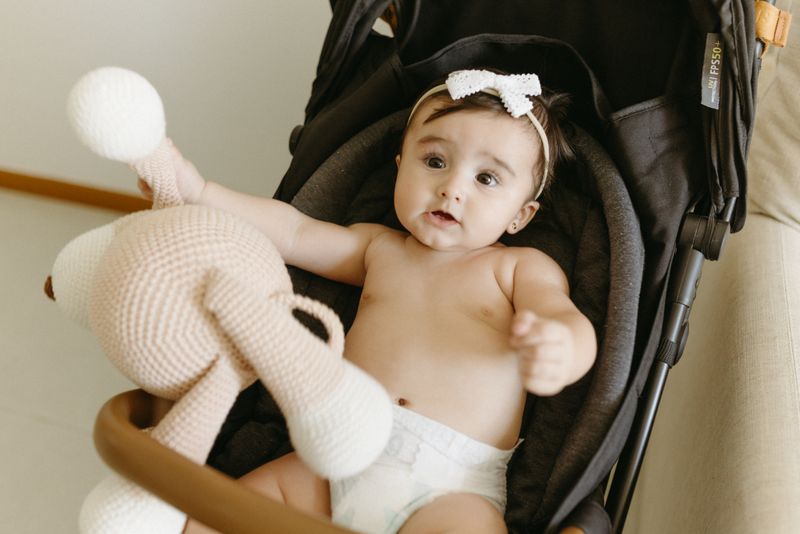
Foam-padded baby gear like car seats, bouncers, and nursing pillows is subject to California's flammability standard (TB 117), which has historically driven manufacturers to treat foam with chemical flame retardants. Since 2014, TB 117-2013 allows products to meet standards without chemical retardants — but many manufacturers still use them.
The Healthy Child Healthy World database tracks which baby gear brands use chemical flame retardants. Look for products explicitly labeled "no added flame retardants" or "flame retardant chemical-free."
Toys
Plasticized PVC (vinyl) toys contain phthalates — plasticizers linked to hormonal disruption. The EU has banned most phthalates from children's toys; the US has banned eight specific phthalates in children's products but many remain in use. Choose toys made from natural materials (wood, natural rubber, organic cotton) or hard plastics like ABS or HDPE rather than soft vinyl.
Baby Food and Food Storage
Heavy metals (arsenic, lead, cadmium, mercury) are a documented concern in commercial baby food — particularly rice-based products and fruit juices. The CPSC has highlighted this in consumer advisories. Making homemade baby food using fresh produce reduces this risk significantly.
For food storage, avoid plastic containers (even BPA-free) for hot foods. Glass containers — even small ones — are preferable for storing purees and leftovers. Our non-toxic food storage guide covers the best options.
Practical Priority List for New Parents
- ✅ Replace crib mattress with GOTS/GREENGUARD Gold certified option
- ✅ Switch to glass or stainless bottles — don't heat plastic
- ✅ Audit baby skincare using EWG Skin Deep — swap anything with synthetic fragrance or parabens
- ✅ Choose flame-retardant-free soft goods — look for TB 117-2013 compliant without chemical additives
- ✅ Filter drinking water — especially important if on well water or in a PFAS-affected area
- ✅ Choose solid wood or natural rubber toys over soft vinyl for mouthed objects
You don't need to eliminate every chemical exposure simultaneously. Prioritize the highest-dose, highest-contact items: the mattress, feeding equipment, and what goes on their skin every day.
Recommended Products
Frequently Asked Questions
Related Resources
- Hard water filtration and water quality guides Your water supply matters as much as your materials.
Why are babies more vulnerable to toxic chemicals than adults?
Infants are more vulnerable because their developing organ systems are more susceptible to disruption; they breathe more air per body weight; they spend more time on surfaces where chemicals concentrate; and they put objects in their mouths. Early-life chemical exposures can have disproportionate long-term effects.
What chemicals should I avoid in baby products?
Key chemicals to avoid: parabens and phthalates in skincare and shampoos; flame retardants in car seats and sleep products; BPA and phthalates in plastic bottles; formaldehyde-releasing preservatives in lotions; and synthetic fragrance (which can contain dozens of undisclosed chemicals).
Are Honest Company baby products non-toxic?
The Honest Company generally avoids the most concerning chemicals — parabens, phthalates, SLS, formaldehyde-releasing preservatives — and publishes an ingredient policy. EWG rates most Honest Company baby products in the 1-3 (low hazard) range. They're a reasonable choice for reducing chemical exposure, though not certified organic.
What is the safest baby bottle material?
Borosilicate glass and medical-grade stainless steel are the safest bottle materials — neither leaches chemicals. If you use plastic, ensure bottles are labeled BPA-free AND phthalate-free. Some BPA-free plastics use BPS as a replacement, which has similar hormonal activity. Glass is the clearest-cut safe choice.
Get weekly guides from ToxinFreeMaterials
No spam. Unsubscribe anytime.