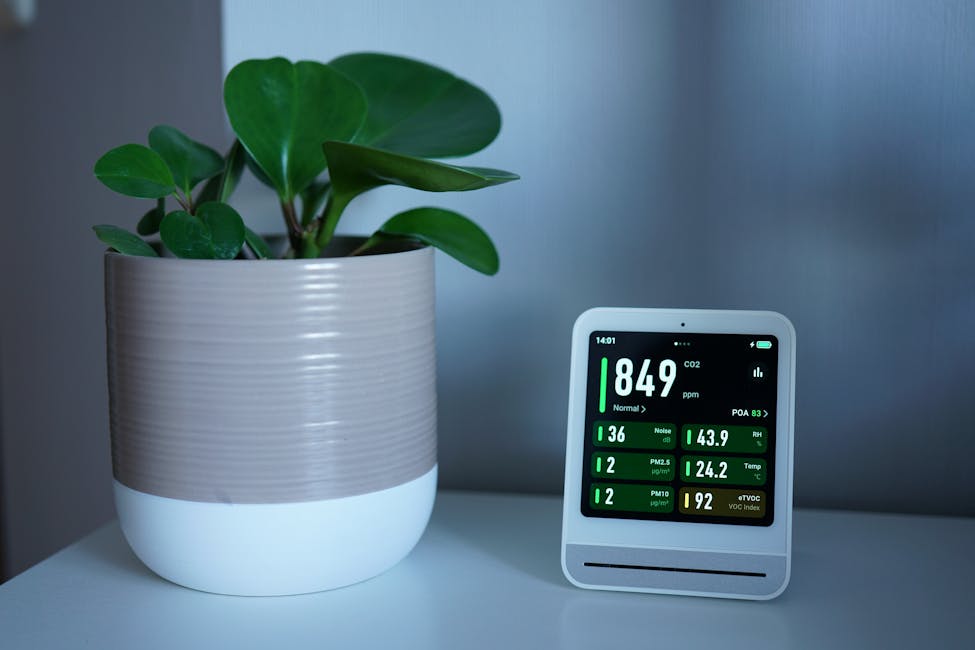
Indoor air quality is generally worse than outdoor air. The EPA estimates that indoor air contains 2-5x the pollutant concentration of outdoor air, and during activities like painting or cleaning, VOC concentrations can spike to 1,000x outdoor levels. The primary indoor air pollutants aren't particles — they're gases: volatile organic compounds (VOCs) and formaldehyde.
Most people buy HEPA air purifiers and assume they're protected. They're not — at least not from VOCs. Here's what actually works.
Why HEPA Doesn't Capture VOCs
HEPA filtration works by physically trapping particles in a dense fiber matrix. The minimum particle size a true HEPA filter captures is 0.3 microns. VOCs and formaldehyde are gas-phase molecules — far smaller than 0.3 microns — and pass straight through HEPA media unchanged.
VOC removal requires activated carbon (activated charcoal) — a material with an enormous surface area that adsorbs gas-phase molecules through chemical bonding. One pound of activated carbon has approximately 100 acres of surface area. The more carbon, and the longer the contact time, the more effective the VOC removal.
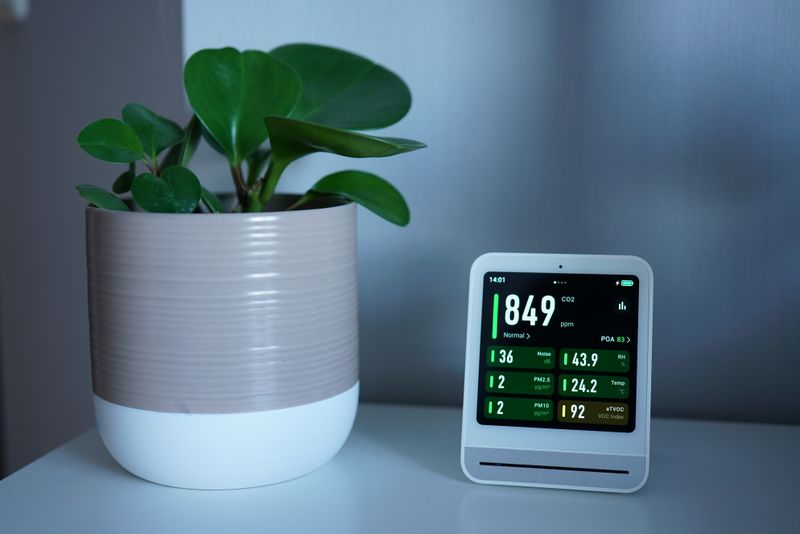
What VOCs Are in Indoor Air?
Common indoor VOCs include:
- Formaldehyde: Off-gasses from pressed wood furniture, MDF, laminate flooring, and some building materials. A known human carcinogen per the National Toxicology Program.
- Benzene: From paint, adhesives, and tobacco smoke. Also a known carcinogen.
- Toluene and xylene: From paints, lacquers, and adhesives.
- Acetaldehyde: From wood burning, tobacco smoke, and some building materials.
- Cleaning product VOCs: Many conventional cleaners release VOCs including ethylene glycol, limonene (in citrus cleaners), and chloroform from bleach.
New furniture and newly renovated spaces have particularly high VOC concentrations. The NIEHS recommends ventilating new furniture and materials outdoors before bringing them inside.
Best Air Purifiers for VOC Removal in 2026
Austin Air Healthmate Plus — Best for High VOC Environments
Austin Air Healthmate Plus
Austin Air builds their units with 15 lbs of activated carbon and zeolite — far more than typical consumer air purifiers. The Healthmate Plus adds potassium iodide-impregnated carbon specifically for formaldehyde and ammonia capture. It's the unit recommended in peer-reviewed studies on indoor VOC reduction.
- ✅ 15 lbs of activated carbon + zeolite
- ✅ True HEPA for particles + substantial VOC removal
- ✅ 5-year filter life (not a marketing gimmick — this is real)
- ✅ Medical-grade unit used in hospital settings
- ✅ Covers 1,500 sq ft
- ❌ High upfront cost (~$700)
- ❌ Heavy and industrial-looking
~$700–$750
Shop Austin Air →IQAir Multigas — Best for Chemical Sensitivity
IQAir Multigas 450
The IQAir Multigas uses a specialized gas-phase filter containing activated carbon and alumina for broad VOC removal, plus the company's HyperHEPA filtration for ultra-fine particles. It's overkill for most households but appropriate for people with chemical sensitivities or in environments with very high VOC loads (new construction, renovation).
- ✅ Professional-grade VOC removal
- ✅ HyperHEPA captures particles down to 0.003 microns
- ✅ Quiet operation for bedroom use
- ✅ Swiss-engineered with rigorous quality control
- ❌ Very expensive (~$1,100+)
- ❌ Gas-phase filter replacement is costly
~$1,100+
Shop IQAir →Winix 5500-2 — Best Budget with Some VOC Capture
Winix 5500-2 with Carbon Filter
If your primary concern is particles with some VOC reduction on a budget, the Winix 5500-2 is a solid performer. Its carbon filter is thin (~0.3 lbs) — adequate for mild odors and light VOC reduction, but not for heavy VOC environments. Don't expect it to handle off-gassing new furniture or renovation. Best for maintenance air quality in an already-clean environment.
- ✅ True HEPA + basic carbon filtration
- ✅ Very affordable (~$130)
- ✅ Covers 360 sq ft effectively
- ❌ Thin carbon filter — minimal VOC removal
- ❌ PlasmaWave ionizer should be disabled (generates ozone)
~$130
Check Price →Reducing VOCs Without an Air Purifier
Air purifiers help — but reducing VOC sources is more effective than trying to filter them out after the fact:
- Ventilate: Open windows. Fresh air dilutes indoor VOC concentrations more effectively than any air purifier.
- Choose low-VOC materials: Paints, adhesives, and finishes are available in low-VOC or zero-VOC formulations. Use them during renovations.
- Air out new furniture: Leave new furniture, especially pressed wood, in a garage or outdoors for 1-2 weeks before bringing indoors.
- Switch to non-toxic cleaning products: Many conventional cleaners are themselves significant VOC sources. See our guide to non-toxic cleaning products.
- Use a non-toxic mattress: Polyurethane foam off-gasses in the bedroom where you spend 7-8 hours. See our non-toxic mattress guide.
Frequently Asked Questions
Related Resources
- Hard water filtration and water quality guides Your water supply matters as much as your materials.
Does a HEPA filter remove VOCs and formaldehyde?
No. HEPA filters capture particles — dust, pollen, pet dander, mold spores — but not gas-phase chemicals like VOCs and formaldehyde. VOC and formaldehyde removal requires activated carbon filtration. Look for air purifiers that combine a true HEPA filter with a substantial activated carbon stage.
What are the most common indoor VOCs?
Common indoor VOCs include formaldehyde (from furniture and building materials), benzene (from paint, adhesives, tobacco smoke), toluene (from paint), xylene, and acetaldehyde. Indoor VOC concentrations are typically 2-5x higher than outdoor levels per the EPA.
How much activated carbon do I need to remove VOCs?
More is better. Many budget air purifiers contain just 0.1-0.5 lbs of carbon — insufficient for meaningful VOC reduction. Effective removal requires at least 2-4 lbs. Austin Air models contain 15 lbs; many bedroom-sized units are inadequate for VOC removal.
Do ionic air purifiers help with VOCs?
Ionic air purifiers and ozone generators should be avoided. They generate ozone as a byproduct, which is itself a lung irritant. The EPA and CPSC both advise against using ozone generators in occupied spaces. Stick to activated carbon + HEPA filtration.
Get weekly guides from ToxinFreeMaterials
No spam. Unsubscribe anytime.