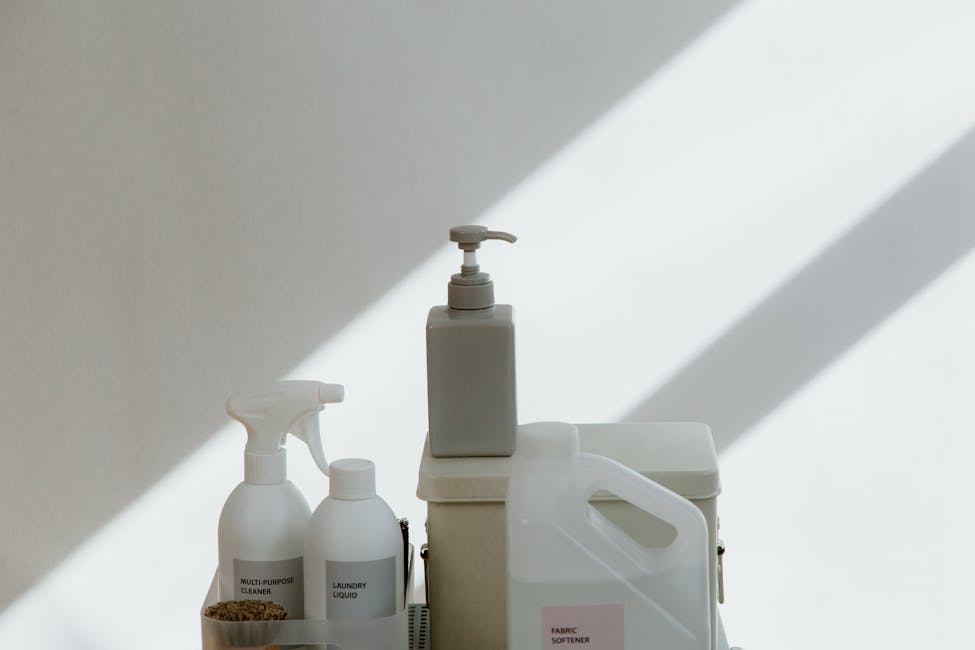
Cleaning products are a major source of indoor air pollution. The EPA has found that indoor VOC concentrations during cleaning activities can be 100x higher than outdoor levels. The irony: the products you use to clean your home are also contaminating its air.
Most of the damage is from three sources: synthetic fragrance (a cocktail of undisclosed VOCs), quaternary ammonium compounds ("quats") — linked to asthma and reproductive harm — and chlorine-based disinfectants that react with organic matter to form chloroform and other disinfection byproducts.
What to Avoid in Conventional Cleaners
- Quaternary ammonium compounds (quats): Used as disinfectants in many antibacterial products. Linked to asthma development in cleaning workers. The Safe Chemicals Coalition has flagged quats as a priority concern. Common names: benzalkonium chloride, benzethonium chloride.
- Glycol ethers: Solvents in many multi-surface sprays. Linked to reproductive harm and red blood cell damage at high concentrations. Common ones: 2-butoxyethanol, EGPE.
- Synthetic fragrance: Cleaning product fragrances contain VOCs including limonene (which reacts with ozone in indoor air to form formaldehyde), linalool, and various terpenes. "Fresh" smelling cleaners are often significant VOC sources.
- Bleach (sodium hypochlorite): Effective disinfectant, but releases chlorine gas at low concentrations, reacts with ammonia to form chloramines, and reacts with organic matter to form trihalomethanes including chloroform. Use in well-ventilated spaces only, and never mix with other cleaners.
The Best Non-Toxic Cleaning Products
Branch Basics — Best All-Purpose Concentrate
Branch Basics Concentrate
Branch Basics is a plant-based concentrate that dilutes into multiple products: all-purpose cleaner, bathroom cleaner, laundry detergent, and dish soap. The formula is EWG A-rated — completely free of synthetic fragrance, quats, dyes, and glycol ethers. One bottle of concentrate replaces your entire cleaning cabinet.
- ✅ EWG "A" rated — verified safe ingredients
- ✅ One concentrate, multiple applications
- ✅ Fragrance-free option available
- ✅ Plastic-free starter kit available
- ✅ Works on most surfaces effectively
- ❌ More expensive upfront (cost-effective long-term)
- ❌ Not an EPA-registered disinfectant — use Force of Nature for disinfection needs
~$69 (starter kit with reusable bottles)
Shop Branch Basics →Force of Nature — Best Non-Toxic Disinfectant
Force of Nature Hypochlorous Acid Cleaner
Force of Nature generates hypochlorous acid (HOCl) from salt, water, and electricity. HOCl is the same compound your immune system produces to kill pathogens — it's EPA-registered as a disinfectant and sanitizer, kills 99.9% of common pathogens, and is safe enough to use around food and children. No toxic fumes, no quat residue.
- ✅ EPA-registered disinfectant (EPA List N)
- ✅ Kills 99.9% of common bacteria and viruses
- ✅ No quats, bleach, or synthetic fragrance
- ✅ Food-safe and gentle enough for skin contact
- ❌ Requires the Force of Nature capsule system (~$60 starter)
- ❌ Solution degrades over time — make fresh as needed
~$60 (starter bundle)
Shop Force of Nature →Seventh Generation Free & Clear — Best Budget Option
Seventh Generation Free & Clear Products
Seventh Generation's Free & Clear line avoids synthetic fragrance, dyes, and most concern-level ingredients. EWG rates most products in the B-C range — not perfect, but considerably better than conventional brands. The "free and clear" designation specifically excludes the most problematic additives. Widely available at mainstream retailers.
- ✅ No synthetic fragrance — free and clear versions
- ✅ Widely available (Target, Whole Foods, Amazon)
- ✅ Reasonable price point
- ❌ Some products contain methylisothiazolinone (skin sensitizer)
- ❌ Not all Seventh Generation products are EWG A-rated
~$5–10 per product
Check Price →
DIY Non-Toxic Cleaners That Actually Work
Several simple formulations handle most cleaning tasks effectively:
- General surface cleaner: Mix 1 part white vinegar with 1 part water. Add a few drops of tea tree oil for mild antimicrobial properties. Note: don't use on natural stone (marble, granite) — vinegar etches the surface.
- Tough scrubbing: Baking soda paste (baking soda + water) is a gentle abrasive for bathroom grime and stovetop buildup. Bar Keepers Friend (oxalic acid) handles tough mineral deposits and rust without toxic ingredients.
- Glass and mirrors: Straight white vinegar in a spray bottle, wiped with a microfiber cloth — streak-free without commercial glass cleaners.
- Laundry: Washing soda + borax + castile soap — effective fragrance-free laundry powder at a fraction of the cost of commercial detergents.
Use the EWG Guide to Healthy Cleaning to check any cleaning product you're considering. For a full approach to reducing chemical exposure in your home, also consider your cookware and air purification setup.
Frequently Asked Questions
Related Resources
- Hard water filtration and water quality guides Your water supply matters as much as your materials.
What cleaning products are most toxic?
The most concerning conventional cleaning products include bleach-based cleaners, ammonia-based cleaners, drain cleaners with sodium hydroxide or sulfuric acid, oven cleaners with lye, and many multi-surface sprays containing glycol ethers and synthetic fragrances linked to respiratory irritation and endocrine disruption.
Does "natural" mean non-toxic for cleaning products?
"Natural" is an unregulated marketing term in the cleaning product industry. Some "natural" brands use plant-derived ingredients that are still sensitizers or allergens. Check EWG's Guide to Healthy Cleaning for specific product ratings rather than relying on front-of-package claims.
Does Branch Basics actually clean effectively?
Branch Basics concentrate cleans effectively for everyday household tasks — general surfaces, laundry, dishes, bathrooms. Its plant-based surfactant blend is EWG A-rated. For heavy-duty jobs like drain clearing, specific non-toxic alternatives (baking soda + vinegar for drains, Bar Keepers Friend for tough stains) may be needed.
Is vinegar effective as a cleaner?
Diluted white vinegar (5% acidity) effectively dissolves mineral deposits, cleans glass, and deodorizes surfaces. It's not an EPA-registered disinfectant and does not reliably kill pathogens at normal concentrations. Use vinegar for cleaning (removing soil), not disinfection in food prep areas.
Get weekly guides from ToxinFreeMaterials
No spam. Unsubscribe anytime.