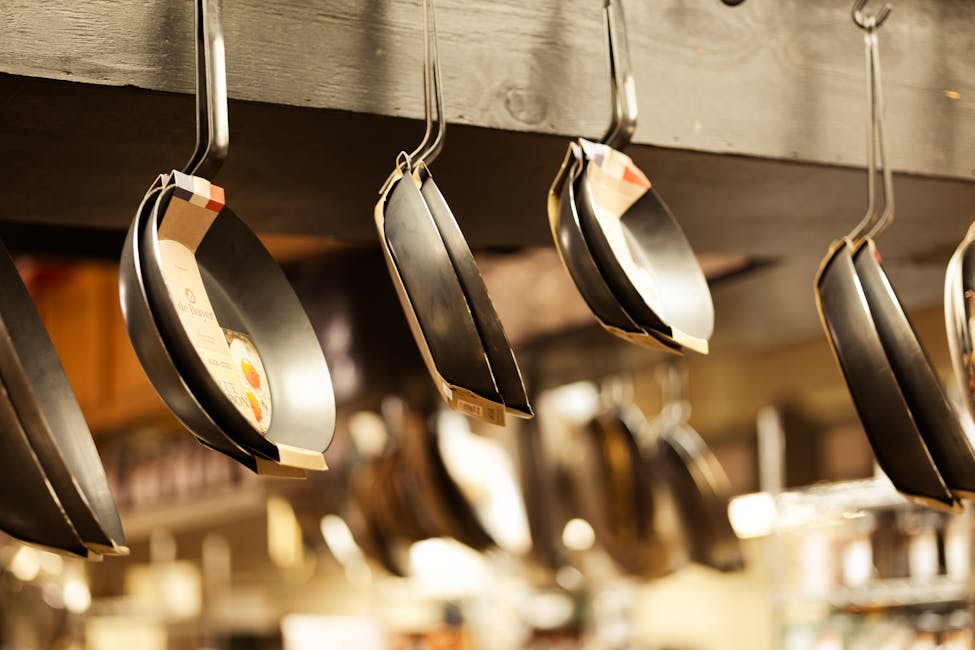
The average household cooks multiple meals per day in cookware coated with per- and polyfluoroalkyl substances (PFAS) — the same class of "forever chemicals" linked to thyroid disruption, immune system impairment, and certain cancers. Most people don't know their pans are the problem.
This guide cuts through the marketing to identify what cookware is genuinely safe, what's a compromise, and what to avoid entirely. We look at materials, certifications, and real-world durability — not just what brands claim.
Why Non-Stick Cookware Is a Problem
Traditional non-stick cookware is coated with PTFE (polytetrafluoroethylene), marketed as Teflon. PTFE itself is relatively stable at normal cooking temperatures, but it begins to break down above 500°F (260°C) — releasing toxic fumes that can cause flu-like symptoms in humans and kill pet birds within hours.
The bigger concern is the manufacturing process. For decades, PTFE was made with PFOA (perfluorooctanoic acid), a PFAS compound now banned in the US after being linked to kidney cancer, thyroid disease, and developmental problems in children. The National Institute of Environmental Health Sciences continues to study PFAS health effects. While PFOA is banned, manufacturers have replaced it with other PFAS compounds with shorter track records and less safety data.
The safest approach: avoid PTFE coatings entirely. Here's what to use instead.
The Best Non-Toxic Cookware Materials
Cast Iron — Best Overall Safety Profile
Lodge Cast Iron Skillet
Cast iron is the gold standard for non-toxic cookware. No coatings, no PFAS, no chemical concerns. A well-seasoned cast iron skillet develops natural non-stick properties through layers of polymerized oil. It lasts generations — Lodge cast iron skillets from the 1930s are still in regular use.
- ✅ Zero synthetic chemicals — completely inert
- ✅ Virtually indestructible — lasts decades
- ✅ Develops non-stick properties with use
- ✅ Works on all heat sources including induction
- ❌ Heavy — 10" skillet weighs ~5 lbs
- ❌ Requires seasoning and drying after use
- ❌ Not ideal for acidic foods (tomatoes degrade seasoning)
~$25–$45 (Lodge 10" skillet)
Check Price →Carbon Steel — Best for High-Heat Cooking
Made In Carbon Steel Skillet
Carbon steel is what professional chefs use. It's lighter than cast iron, heats faster and more evenly, and develops the same natural non-stick seasoning. Like cast iron, it contains no synthetic coatings and is completely PFAS-free.
- ✅ PFAS-free — same safety as cast iron
- ✅ Lighter than cast iron (2–3 lbs)
- ✅ Heats more quickly and evenly
- ✅ Excellent for searing, stir-fry, eggs
- ❌ Requires seasoning
- ❌ More expensive than cast iron
- ❌ Not dishwasher safe
~$80–$150
Check Price →Caraway Ceramic — Best Non-Stick Without PFAS
Caraway Ceramic Cookware Set
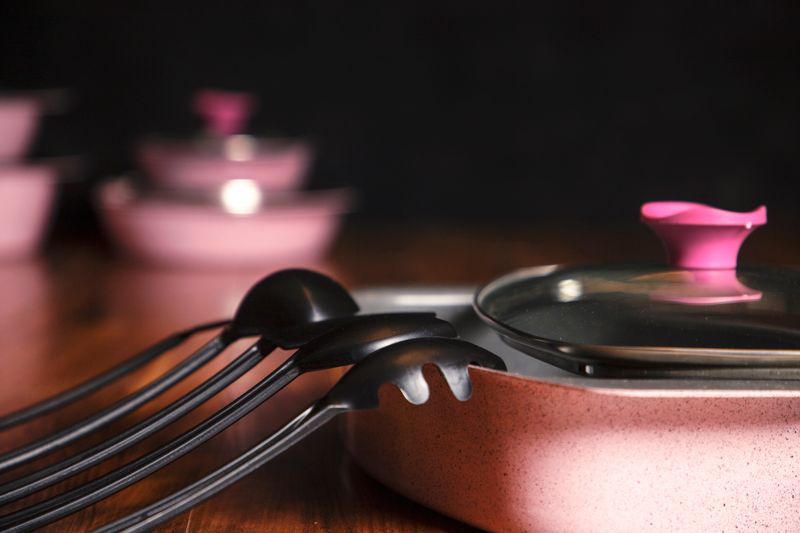
Caraway uses a mineral-based ceramic coating that is certified free of PTFE, PFOA, lead, cadmium, and other toxic metals. It's the best-verified non-stick option for consumers who want ease of cooking without synthetic chemical exposure. The Caraway cookware set is available in a range of sizes.
- ✅ PTFE-free and PFAS-free ceramic coating
- ✅ Third-party certified — no lead or cadmium
- ✅ Genuine non-stick performance
- ✅ Dishwasher-safe (though hand washing extends life)
- ❌ Ceramic coating degrades over 1-3 years
- ❌ More expensive than bare metal options
- ❌ Don't use above medium-high heat
~$145 (individual pans), ~$395 (cookware set)
Shop Caraway →18/10 Stainless Steel — Best for Durability
All-Clad Stainless Steel Skillet
18/10 stainless steel (18% chromium, 10% nickel) is highly stable and doesn't leach chemicals at cooking temperatures. It's not naturally non-stick, but with proper preheating technique, it performs well. The nickel content can be an issue for those with nickel allergies.
- ✅ No synthetic coatings — completely inert
- ✅ Extremely durable — decades of use
- ✅ Dishwasher safe
- ✅ Excellent for searing and deglazing
- ❌ Not non-stick — requires technique
- ❌ Nickel content (concern for nickel-sensitive individuals)
- ❌ Can be expensive for quality brands
~$100–$200
Check Price →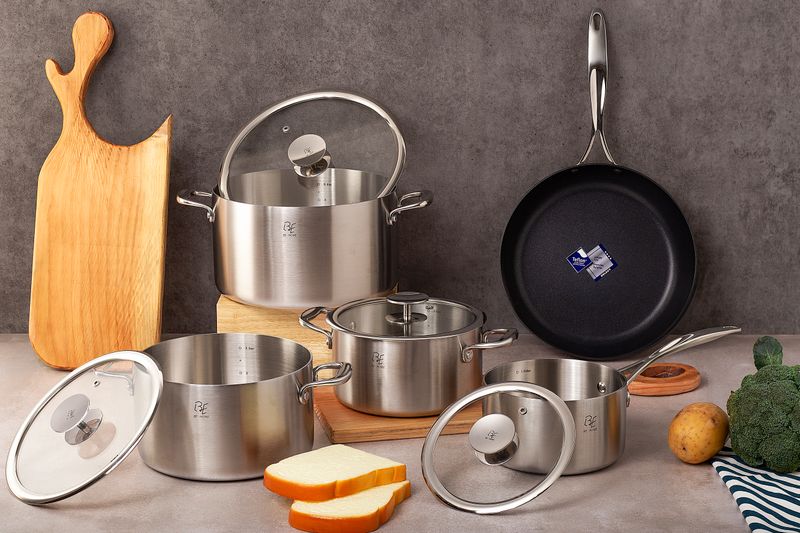
What to Avoid
Avoid any cookware described as "non-stick" unless it explicitly certifies PTFE-free and PFAS-free. "PFOA-free" is not the same as PFAS-free — PFOA is just one of thousands of PFAS compounds. Read the full breakdown of PFAS in cookware to understand what's actually in your pans.
Also avoid cookware with chipped or scratched non-stick surfaces — even if the coating was once considered safe, degraded coatings can release particles and fumes. Replace them.
The EWG's Take on Non-Stick Cookware
The Environmental Working Group recommends cast iron, stainless steel, and ceramic as the safest alternatives to PTFE non-stick cookware. They note that "PFOA-free" labeling is misleading because manufacturers replaced PFOA with other PFAS compounds — a practice called "regrettable substitution."
Making the Switch: Practical Advice
You don't need to replace everything at once. Start with the pans you use most — likely a skillet and a saucepan. A 10" cast iron or carbon steel skillet handles 80% of everyday cooking. Add a stainless steel saucepan for sauces and boiling. Transition gradually as old cookware wears out.
For more on the specific chemicals in your current cookware, see our guide to PFAS in cookware: what the science says. And when you're thinking about what food you store after cooking, check our guide to non-toxic food storage options.
Frequently Asked Questions
Related Resources
- Hard water filtration and water quality guides Your water supply matters as much as your materials.
What is the safest non-toxic cookware material?
Cast iron, carbon steel, stainless steel (18/10), and enamel-coated cast iron are the safest cookware materials. They contain no PFAS, no synthetic coatings, and don't leach chemicals at normal cooking temperatures. Each has tradeoffs: cast iron requires seasoning, stainless can stick without proper technique.
Is Caraway cookware truly non-toxic?
Caraway uses a ceramic-coated surface certified free of PTFE, PFOA, lead, and cadmium. Ceramic coatings are generally considered safer than PTFE. At normal cooking temperatures, Caraway is a solid non-toxic choice, though ceramic coatings degrade over 1-3 years of regular use.
At what temperature does non-stick cookware become dangerous?
PTFE coatings begin to break down and release fumes at approximately 500°F (260°C). Leaving an empty non-stick pan on high heat can easily exceed this threshold. At 570°F (300°C), PTFE releases toxic polymer fumes that can cause polymer fume fever in humans and are fatal to birds.
Can I use stainless steel without food sticking?
Yes, with proper technique. Preheat the pan on medium heat before adding oil. Add oil and let it heat until it shimmers. Then add food — it should release naturally once a crust forms. Don't add cold food to a cold pan, and don't use heat above medium for most cooking tasks.
How long does ceramic cookware last?
Ceramic coatings typically last 1-3 years with regular use before non-stick properties degrade. Avoid metal utensils, high heat, and the dishwasher to extend lifespan. Cast iron and carbon steel, by contrast, last decades and improve with use.
Get weekly guides from ToxinFreeMaterials
No spam. Unsubscribe anytime.