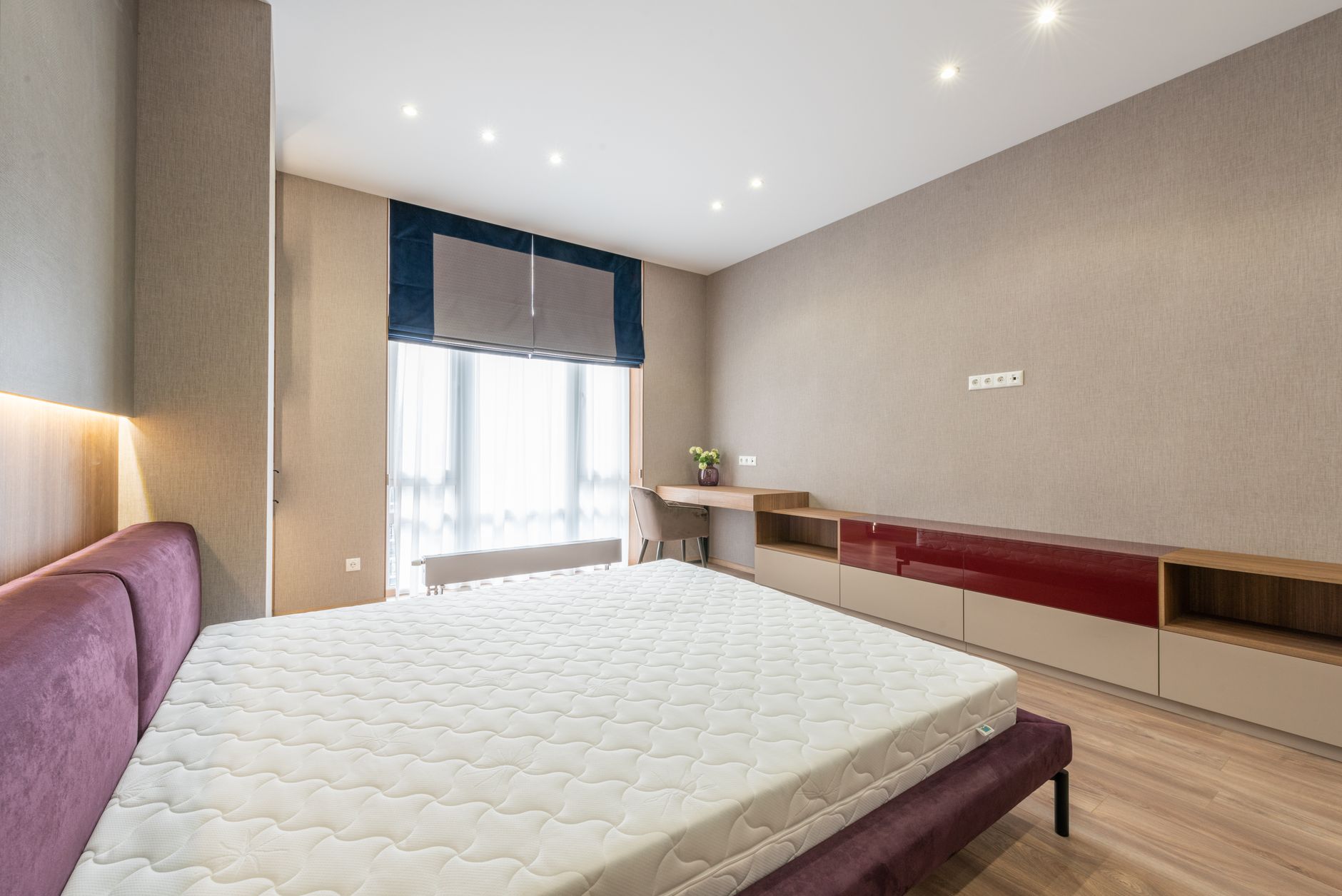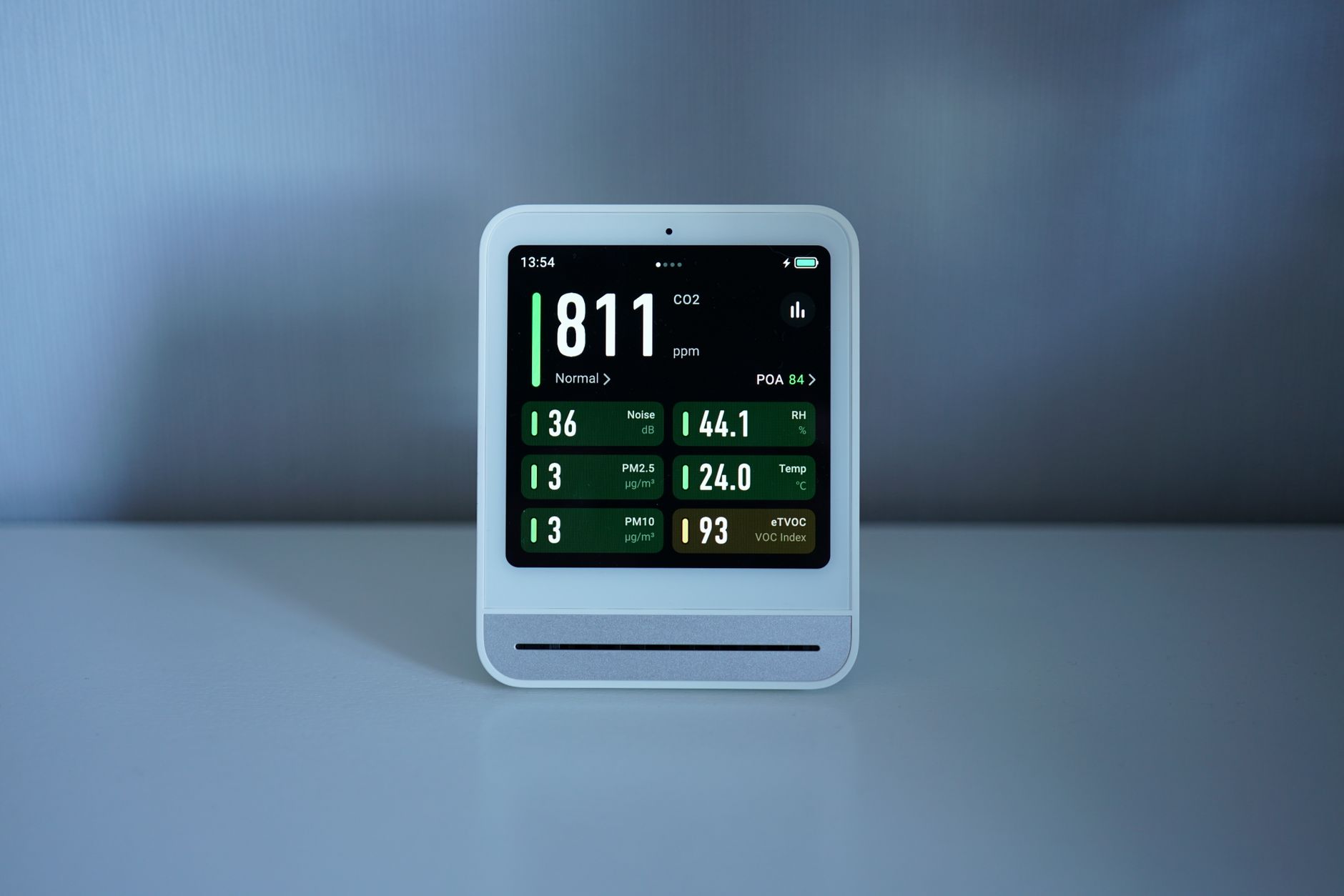
Formaldehyde and other volatile organic compounds are the reason a new mattress, cabinet, or paint job can make indoor air feel sharp. The Centers for Disease Control and Prevention warns that formaldehyde can irritate the eyes, nose, and throat, and sensitive people may notice symptoms at levels below 0.1 parts per million. That is not a rare problem. Indoor air testing in newer homes often finds bedrooms that exceed California’s chronic reference exposure level for formaldehyde of 9 micrograms per cubic meter, roughly 7 parts per billion. Source control is the first step, but a well designed purifier with deep activated carbon can be a useful second layer. Check our guide to non-toxic cleaning products before masking the problem with a machine.
Most air purifiers sold for allergies are built around HEPA filter media. HEPA is excellent for particles, but formaldehyde is a gas with a molecular size far smaller than what HEPA captures. To remove chemicals, you need an adsorptive media bed made from activated carbon, carbon-impregnated cloth, zeolite, or potassium permanganate. The physical mass of that bed matters. A thin carbon sheet in a budget purifier will saturate quickly, while a 15 to 30 pound carbon filter can keep working for months under moderate off-gassing. If you are sleeping on a new foam mattress, you may also want to compare our best non-toxic mattress guide to reduce the source at the bed itself.
To rank the best air purifiers for VOCs and formaldehyde in 2026, we focused on chemical filtration, not just clean air delivery rate for particles. We looked at carbon bed mass, dwell time, filter replacement pricing, and whether the brand publishes gas-phase test data. We also cross-checked chemical safety context from the Environmental Working Group, which has long tracked indoor air contaminants and product chemical risks. The picks below are not medical devices, but they do represent the most practical tool you can buy after source control and ventilation. For other indoor contaminant classes, like PFAS in drinking water, see our best water filters for PFAS removal.
How Do the Top Options Compare?
| Model | Best For | Filtration | Coverage | Price |
|---|---|---|---|---|
| IQAir HealthPro Plus | High-capacity gas and particle filtration | V5-Cell carbon-zeolite + HyperHEPA | Up to 1,125 sq ft | Check price |
| Austin Air HealthMate Plus | Bedroom long-term off-gassing | 15 lb carbon/zeolite + HEPA | Up to 1,500 sq ft | Check price |
| Airpura C600 | Heavy formaldehyde and renovation spaces | 26 lb carbon bed + HEPA | Up to 2,000 sq ft | Check price |
| AllerAir AirMedic Pro 6 | Custom carbon blends and sensitivity | Up to 32 lb carbon + HEPA | Up to 2,000 sq ft | Check price |
| Coway Airmega 250 | Moderate VOC reduction, smaller rooms | Granular carbon + HEPA | Up to 930 sq ft | Check price |
Prices are approximate retail as of early 2026 and do not include replacement filters. Coverage claims come from manufacturer specifications. Carbon bed mass is one factor, but dwell time and airflow also affect real-world VOC removal.
1. IQAir HealthPro Plus , Best for high-capacity gas and particle filtration
The IQAir HealthPro Plus is one of the few consumer purifiers that combines high-efficiency particle filtration with an independently tested gas phase cell. Its V5-Cell filter packs about 5 pounds of activated carbon and alumina media, which is enough to reduce many volatile organic compounds in medium to large rooms. IQAir publishes test data showing formaldehyde reduction. Most budget brands do not. This is a meaningful difference if you are furnishing a new nursery or office. Check the IQAir HealthPro Plus on Amazon for current pricing.
The machine moves a lot of air but is not quiet on higher speeds. At low speed it is tolerable for a bedroom. The main cost is not the initial purchase alone, but replacement filters. The V5-Cell gas filter will need replacement more often in high VOC environments. We like that the system shows filter life by runtime and airflow, not by guesswork. If you also worry about fine particles and microplastics, take a look at our how to reduce microplastics at home guide.
Key strengths:
- ✅ Uses a dedicated V5-Cell gas filter with about 5 pounds of carbon and alumina media
- ✅ Publishes filter efficiency data for particles and gases
- ✅ Covers up to 1,125 square feet in normal use
- ✅ Long filter life in moderate chemical conditions
- ✅ Digital filter life monitoring avoids premature replacements
- ❌ High upfront cost plus expensive replacement filters
- ❌ Loud at maximum fan speed
- ❌ Large floor footprint may overwhelm smaller rooms
Who it’s for: Choose this if you want a long-running purifier with real gas-phase data and you can afford filter upkeep.
2. Austin Air HealthMate Plus , Best for bedrooms with long-term off-gassing
Austin Air builds the HealthMate Plus around a substantial 15-pound bed of activated carbon and zeolite. Zeolite helps capture formaldehyde, ammonia, and other small polar molecules that plain carbon can miss. This is a common choice for bedrooms because it pairs that chemical bed with a true HEPA filter for allergens and dust. Unlike thinner carbon sheet purifiers, the HealthMate Plus is closer to the industrial air scrubbers used in restoration work. Check the Austin Air HealthMate Plus on Amazon for current price.
The filter design is simple and heavy. The whole filter cartridge usually needs replacement every two to five years depending on the chemical load, which is longer than many competitors. The downside is that the unit is utilitarian and the fan is not the quietest. For a nursery, it is wise to combine it with source checking. Our non-toxic baby products guide can help you reduce off-gassing at the crib before air cleaning begins.
Key strengths:
- ✅ 15-pound carbon and zeolite filter provides serious chemical capacity
- ✅ True HEPA layer captures particles at the same time
- ✅ Filter replacement interval often reaches two to five years
- ✅ Simple controls that hold up well
- ✅ Made with a powder-coated steel housing
- ❌ Bulky industrial look may not suit every room
- ❌ No smart sensor or automatic air quality mode
- ❌ Higher fan speeds are clearly audible
Who it’s for: Select this if you want strong chemical capacity in a bedroom without constant filter babysitting.
3. Airpura C600 , Best for heavy formaldehyde loads and renovation spaces
The Airpura C600 is built for spaces that need serious chemical scrubbing. It uses a 26-pound activated carbon bed, with optional potassium permanganate impregnation for formaldehyde. That is a much larger media load than most residential purifiers. The result is a long contact time, which matters because VOC removal depends on how long air molecules stay in contact with the carbon. Check the Airpura C600 on Amazon if you are dealing with fresh paint, new cabinets, or renovation dust.
The unit is heavy and basic. There is no app, and no auto mode. But the cylindrical carbon bed is designed to be refilled, which can lower long term cost if you are willing to handle bulk media. This is not a unit for particle-only allergies. It is a chemical workhorse. If you are also looking for cleaning products that do not add more VOCs to the room, see our non-toxic cleaning products that work in 2026.
Key strengths:
- ✅ 26-pound carbon bed provides some of the highest gas capacity in a home unit
- ✅ Optional potassium permanganate blend improves formaldehyde removal
- ✅ Refillable carbon bed reduces long term filter cost
- ✅ High airflow for large rooms near 2,000 square feet
- ✅ No plastic housing that off-gasses when new
- ❌ Heavy and difficult to move between floors
- ❌ No smart controls or automatic fan adjustment
- ❌ Replacement media can be messy to swap
Who it’s for: Choose the Airpura C600 if you have a dedicated space with high VOC levels and want maximum carbon load per dollar.
4. AllerAir AirMedic Pro 6 , Best for custom carbon blends and chemical sensitivity
AllerAir lets you choose carbon blends for specific chemical classes. The AirMedic Pro 6 can be ordered with a standard carbon bed or with specialized media for formaldehyde, ammonia, or volatile sulfur compounds. The unit has a true HEPA filter and can hold up to 32 pounds of activated carbon in its deep bed. This flexibility matters for people with chemical sensitivity who know their triggers.
The downside is price and physical size. This is a floor machine that weighs over 50 pounds. Replacement filters are also expensive, though the deep bed often lasts several years. We also appreciate that AllerAir sells a five-year warranty on the motor. It is not a lifestyle product. It is a serious air scrubber for rooms with ongoing emissions.
Key strengths:
- ✅ Custom carbon blends target specific chemical groups
- ✅ Up to 32 pounds of activated carbon in a deep bed
- ✅ True HEPA filter adds particle removal
- ✅ Five-year motor warranty
- ✅ Made in North America with a steel housing
- ❌ Very heavy and expensive to ship
- ❌ Replacement carbon filters are costly
- ❌ Fan is strong but loud on high
Who it’s for: Select the AirMedic Pro 6 if you have known chemical sensitivities and need a tailored media blend.
5. Coway Airmega 250 , Best for moderate VOC reduction in smaller rooms
The Coway Airmega 250 is the most affordable option here by a wide margin. Its activated carbon filter is much smaller than the deep-bed machines above, so do not expect heavy formaldehyde control. But for a bedroom or home office with mild off-gassing from furniture, it provides useful chemical reduction along with excellent particle filtration. The smart auto mode adjusts airflow based on particulate matter, which helps when cooking or dusting.
The compromise is carbon capacity. The Airmega 250 uses roughly 2 to 3 pounds of granular carbon, so it will saturate quickly in a freshly renovated space. If you need serious VOC removal, choose one of the larger carbon beds. If you want a budget-friendly particle and odor machine, this is a solid pick. It is also quieter than the big metal units and fits better in a small room.
Key strengths:
- ✅ Much lower upfront cost than deep-bed units
- ✅ Auto mode responds to real-time particle readings
- ✅ Quiet on low and medium speeds
- ✅ Replacements are cheaper and widely available
- ❌ Small carbon filter saturates quickly under heavy VOC loads
- ❌ No dedicated gas-phase test data for formaldehyde
- ❌ Coverage is smaller than the floor units
Who it’s for: Choose the Coway Airmega 250 if you need a smaller, budget-friendly purifier for mild chemical and particle control.
Frequently Asked Questions
Do HEPA filters remove formaldehyde?
No. HEPA media captures fine particles, not gases. Formaldehyde is a gas that passes through HEPA fibers, so a purifier needs activated carbon, zeolite, or other chemical media to adsorb it.
How much activated carbon do I need for VOC removal?
For meaningful reduction in a typical room, look for at least 10 to 15 pounds of activated carbon. Thin carbon sheets in budget purifiers saturate quickly. Larger carbon beds last longer and provide more contact time.
How often should I replace a carbon filter for formaldehyde?
In moderate conditions, deep carbon beds may last two to five years. In freshly renovated or heavily off-gassing spaces, replacement may be needed in six to twelve months. Watch for odor breakthrough or reduced airflow.
Can an air purifier remove all VOCs?
No. Some light gases and very volatile compounds are hard to capture. Source control, ventilation, and low-emission furniture and finishes are still the most effective ways to reduce total VOC exposure.
Are ozone generators safe for removing formaldehyde?
No. Ozone does not effectively remove most VOCs and can irritate the lungs. The CDC and EPA advise against using ozone generators in occupied spaces because ozone itself is a respiratory irritant.
What indoor formaldehyde level is considered safe?
There is no single home standard. California’s chronic reference exposure level is 9 micrograms per cubic meter, roughly 7 parts per billion. Many new homes exceed this after fresh paint or furniture, which is why source control matters.
What Should You Remember?
- Carbon bed mass is the spec that matters: Thin carbon sheets cannot handle formaldehyde for long.
- HEPA alone will not do it: Gas-phase media is required for VOCs.
- Source control comes first: Reduce off-gassing from furniture, paint, and cleaning products.
- Filter lifetime varies: Plan for more frequent carbon replacement in newly renovated spaces.
- Avoid ozone generators: They can worsen indoor air quality.
- Match coverage to room size: Oversizing a purifier can help reduce noise and increase filter life.
This article is for general information only and is not medical, legal, or regulatory advice. Chemical-safety claims and product choices should be verified against current scientific research and the guidance of relevant agencies (EPA, FDA, EWG, CDC). Always follow manufacturer instructions and consult a qualified professional for health or exposure concerns.