Food storage often gets less scrutiny than cookware, but it touches every meal. Plastics can leach BPA, phthalates, and other additives into leftovers, especially when heated or stained with acidic sauces. The EPA now enforces a drinking water limit of 4.0 parts per trillion for PFOA and PFOS, but food containers are not regulated the same way. That gap puts more responsibility on shoppers. We focused on materials with the fewest known leachables for 2026. If you want to cut PFAS exposure from water too, see our PFAS in drinking water guide.
No single material is perfect. Glass is inert but heavy and breakable. Stainless steel is durable but cannot go in the microwave. Silicone is flexible but poorly recycled. BPA-free plastic still contains dozens of substitute bisphenols that are less studied. We compared products across five practical categories: oven-safe glass, meal-prep glass, plastic-free stainless, reusable silicone, and reusable wraps. We checked food-contact safety under FDA standards and looked for third-party testing such as EU LFGB compliance. Our goal is to help you choose containers that minimize chemical migration without ignoring real kitchen needs.
Plastic containers are the biggest concern. The CDC found bisphenol A in 93 percent of urine samples in a national survey. BPA is an endocrine disruptor linked to reproductive and metabolic effects in some studies. Many brands replaced BPA with BPS or BPF, which may have similar hormonal activity. Phthalates appear in some flexible lids and vinyl wraps. We avoid those when possible. To understand which cookware materials also matter, read our best non-toxic cookware 2026 guide before you upgrade your whole kitchen.
What matters now is not just the container body but the lid, gasket, and any coatings. A glass container with a plastic lid is still mostly safe because food rarely touches the lid during storage. But steam from reheating can condense and drip back down. We recommend removing plastic lids for microwave use. Stainless steel containers with silicone seals offer a fully plastic-free interior. Beeswax wraps work for cool storage but not hot foods. For chemical-safe cleaning products that do not leave residue, see our non-toxic cleaning products guide.
How Do the Top Options Compare?
| Product | Best For | Material | Leach Risk | Price |
|---|---|---|---|---|
| Pyrex Ultimate Glass Storage Set | Oven-to-table glass | Borosilicate glass with BPA-free lids | Very low for glass body | Check price on Amazon |
| Glasslock Oven Safe Food Storage Containers | Meal prep and leftovers | Soda-lime glass with snap-lock lids | Low for glass body | Check price on Amazon |
| U Konserve Stainless Steel Food Containers | Plastic-free lunch boxes | 304 stainless steel with silicone seals | Very low | Check price on Amazon |
| Stasher Platinum Silicone Bags | Reusable bags and sous vide | Platinum silicone | Low under proper use | Check price on Amazon |
| Bee’s Wrap Reusable Beeswax Food Wraps | Wrapping produce and bowls | Cotton, beeswax, jojoba oil, resin | Very low for cold storage | Check price on Amazon |
Prices are list prices at publication and change often. Leach risk ratings refer to the food contact surface only. Lids may contain plastic even on glass and stainless sets. Always remove plastic lids before heating.
1. Pyrex Ultimate Glass Storage Set , Oven-to-table glass
Pyrex Ultimate uses borosilicate glass, which resists thermal shock better than soda-lime glass. That means you can move the dish from freezer to oven with fewer breakage worries, although you should still avoid extreme temperature swings. The glass body is inert and does not contain bisphenols, phthalates, or PFAS. The food contact surface is pure glass. The only plastic is the lid, which is labeled BPA-free but still should not be heated.
This set works well for leftovers, casseroles, and meal prep. The glass can go in the microwave, oven, and dishwasher. The plastic lids snap on for storage and are leak resistant for upright liquids. We recommend removing the lid before reheating and covering with a glass plate or silicone lid instead. If you need to replace other kitchen plastics, start with the containers you use for hot foods and acidic sauces.
Key strengths:
- ✅ Borosilicate glass handles oven and freezer temperatures well
- ✅ Food contact surface is non-porous and stain resistant
- ✅ BPA-free lids are leak resistant for storage
- ✅ Dishwasher safe without absorbing odors
- ❌ Plastic lids cannot be used in the oven or microwave
- ❌ Heavier than plastic and can shatter if dropped
- ❌ Glass may show fingerprints and needs careful stacking
Who it’s for: Choose this if you want oven-safe glass storage and can handle heavier containers.
2. Glasslock Oven Safe Food Storage Containers , Meal prep and leftovers
Glasslock uses tempered soda-lime glass with snap-lock plastic lids. The glass base is non-toxic and does not absorb stains or smells from tomato sauce or curry. The lids have a silicone gasket that creates a tighter seal than standard glass containers. You can bake, microwave, and freeze the glass base, but the lid must come off first. The plastic lid is BPA-free and top-rack dishwasher safe, though repeated high heat can warp it.
Soda-lime glass is more affordable than borosilicate but more vulnerable to thermal shock. Do not move a Glasslock container straight from freezer to preheated oven. Let it sit on the counter for a few minutes first. For liquids, the snap-lock design helps prevent leaks. This is a practical set for weekly meal prep. If your water also needs attention, check the best water filters for PFAS removal to reduce another common exposure route.
Key strengths:
- ✅ Snap-lock lids provide a secure seal for soups and sauces
- ✅ Glass base is non-toxic, stain resistant, and dishwasher safe
- ✅ Oven, microwave, freezer, and fridge compatible with lid removed
- ✅ Stackable shapes maximize cabinet space
- ❌ Soda-lime glass can crack under sudden temperature change
- ❌ Plastic lids are not safe for any heating
- ❌ Set is heavy and bulky compared with plastic
Who it’s for: Good for meal preppers who want a leak resistant glass set at a lower price than borosilicate.
3. U Konserve Stainless Steel Food Containers , Plastic-free lunch boxes
U Konserve containers use 304 stainless steel, a food-grade alloy that is nearly inert. Steel does not leach bisphenols, phthalates, or PFAS into food. The lids vary by set. Some have a stainless lid with a silicone seal, creating a completely plastic-free food contact surface. Others use BPA-free plastic for a lighter, lower-cost option. The full stainless version is our top pick for packing lunches, nuts, cut fruit, and dry snacks.
The main tradeoff is heating. Stainless steel cannot go in the microwave at all. It can be used in the oven for some tasks, but not with plastic or silicone lids. Steel is also heavier than plastic and may dent if dropped. However, a good steel container can last a decade or more. For more ways to lower plastic particles in food, see our how to reduce microplastics at home guide.
Key strengths:
- ✅ Food contact surface is 100 percent stainless steel
- ✅ Does not absorb flavors, stains, or odors
- ✅ Durable enough for daily lunches and outdoor use
- ✅ Silicone seals are replaceable on many models
- ❌ Cannot be microwaved
- ❌ Stainless can dent if dropped or crushed
- ❌ Costs more than plastic or basic glass sets
Who it’s for: Pick this if you want a plastic-free lunch container that can survive being dropped in a backpack.
4. Stasher Platinum Silicone Bags , Reusable bags and sous vide
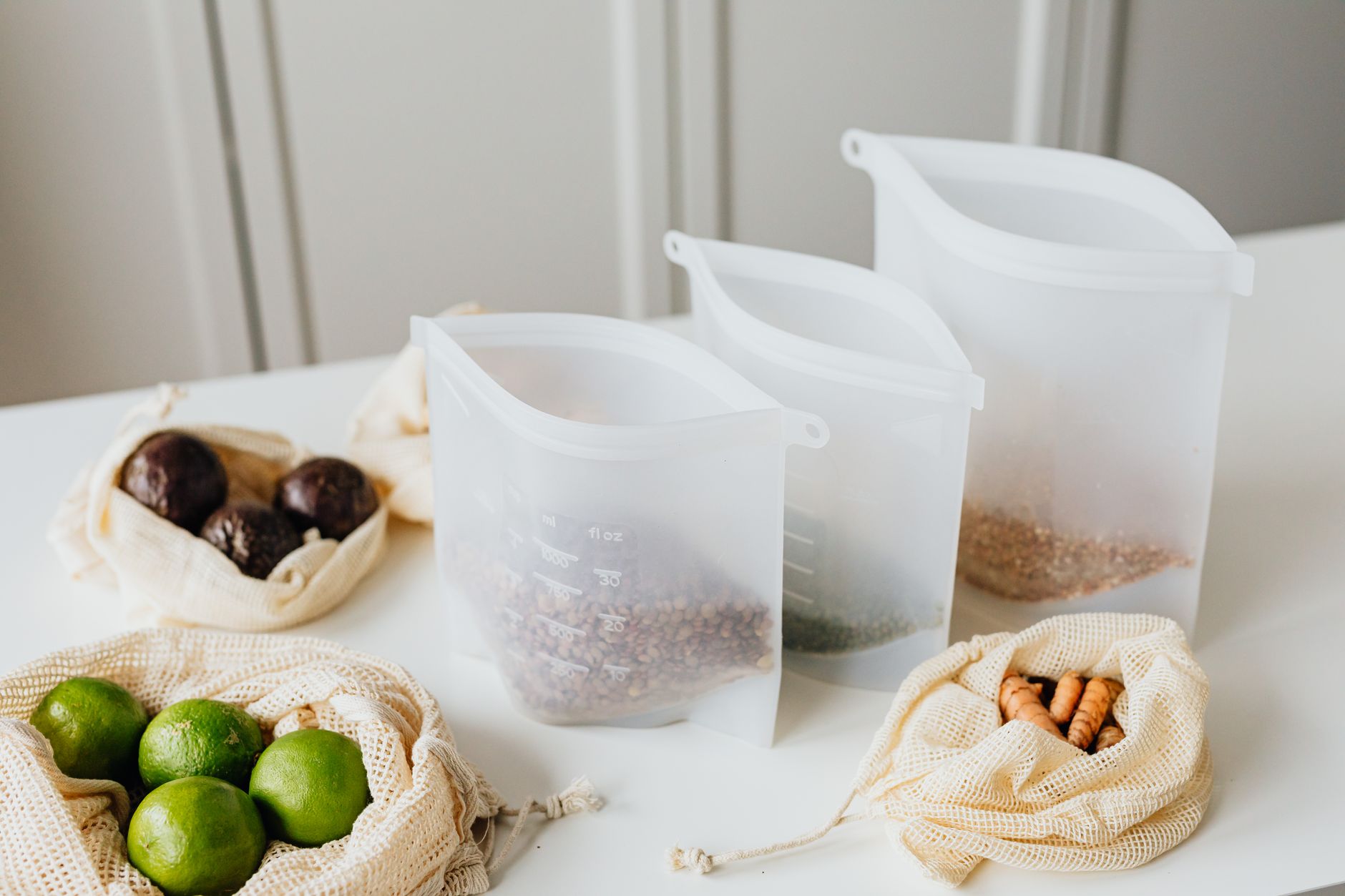
Stasher bags are made from platinum-cured silicone, which contains no BPA, PVC, latex, or phthalates. Platinum curing leaves fewer residual compounds than peroxide curing. The bags are flexible, self-sealing, and can go from freezer to boiling water. That makes them useful for marinating, freezing, and even sous vide cooking. They replace hundreds of disposable zip-top bags over their life.
Silicone is not a perfect material. It is not curbside recyclable and can retain strong odors from garlic, curry, and tomato sauce. You can remove some odors by soaking in vinegar or baking soda. Avoid using these bags for direct stovetop frying with hot oil. For hot oven use, keep temperatures at or below 400 degrees Fahrenheit. If you want a broader PFAS-free kitchen upgrade, read our PFAS-free cookware guide.
Key strengths:
- ✅ Platinum silicone is free of BPA, PVC, and phthalates
- ✅ Safe for freezer, oven, and boiling water up to 400 degrees F
- ✅ Reusable and dishwasher safe
- ✅ Seals well enough for liquids when upright
- ❌ Can retain strong food odors and stains
- ❌ Not accepted in most curbside recycling programs
- ❌ Higher upfront cost than disposable bags
Who it’s for: Choose this if you want a versatile reusable bag for freezing, marinating, and sous vide.
5. Bee’s Wrap Reusable Beeswax Food Wraps , Wrapping produce and bowls
Bee’s Wrap uses organic cotton coated with beeswax, jojoba oil, and tree resin. The coating creates a cling similar to plastic wrap without synthetic polymers. These wraps cover bowls, wrap cheese and bread, and bundle produce. They are reusable for up to a year with proper care. The materials are biodegradable at end of life, so they do not contribute long-lived microplastics.
The limitation is temperature. Beeswax softens when it gets warm, so do not use these wraps on hot dishes or in the microwave. They also cannot be washed in a dishwasher or with hot water. Hand wash in cool water with mild soap and air dry. This is a low-waste option for cold storage only.
Key strengths:
- ✅ Made from biodegradable and compostable materials
- ✅ Reusable for up to a year with care
- ✅ No plastic or silicone contact with food
- ✅ Conforms easily to bowls and irregular shapes
- ❌ Cannot be used with hot foods or in the microwave
- ❌ Must be hand washed in cool water only
- ❌ Wears out and loses cling after about one year
Who it’s for: Best for low-waste cold storage and avoiding plastic wrap.
Frequently Asked Questions
Is all glass food storage non-toxic?
Container glass is generally inert and does not leach bisphenols or phthalates. The risk comes from plastic lids and gaskets. Keep lids away from direct heat and use a glass or silicone cover when reheating.
Are silicone bags safe for microwave and oven use?
Platinum silicone bags can handle oven temperatures up to about 400 degrees Fahrenheit and are safe for boiling water. Avoid using them with very hot oil or on direct stovetop heat. Wash them promptly to reduce odor retention.
What does BPA-free actually mean?
BPA-free means the plastic does not contain bisphenol A. It may still contain substitute bisphenols like BPS or BPF, which are less studied. Look for products tested by an independent lab if you want stronger assurance.
Can I microwave food in a plastic container labeled BPA-free?
Even BPA-free plastics can leach other chemicals when heated. Transfer food to glass or ceramic for microwaving. If you must use plastic, keep it cool and avoid fats and acidic sauces.
How do I remove stains and odors from glass and stainless containers?
Wash with warm water and mild dish soap. Soak in a paste of baking soda and water for stubborn odors. For stainless, white vinegar can help remove residue. Avoid abrasive scrubs on glass lids.
Are beeswax wraps safe for all foods?
Beeswax wraps are safe for cold and room temperature foods like cheese, bread, produce, and leftovers. Do not use them with raw meat, hot food, or in the microwave because the wax can melt and transfer to food.
What Should You Remember?
- Glass is the best all-purpose non-toxic choice, but remove plastic lids before heating.
- Stainless steel offers a fully plastic-free interior and lasts for years but cannot be microwaved.
- Silicone bags replace single-use plastic and are safer than PVC, but they retain odors and are hard to recycle.
- BPA-free plastic is not automatically safe because substitute bisphenols may have similar effects.
- Beeswax wraps reduce plastic waste but are only for cold storage.
- Heating is the main risk factor for chemical migration from plastic containers.
This article is for general information only and is not medical, legal, or regulatory advice. Chemical-safety claims and product choices should be verified against current scientific research and the guidance of relevant agencies (EPA, FDA, EWG, CDC). Always follow manufacturer instructions and consult a qualified professional for health or exposure concerns.