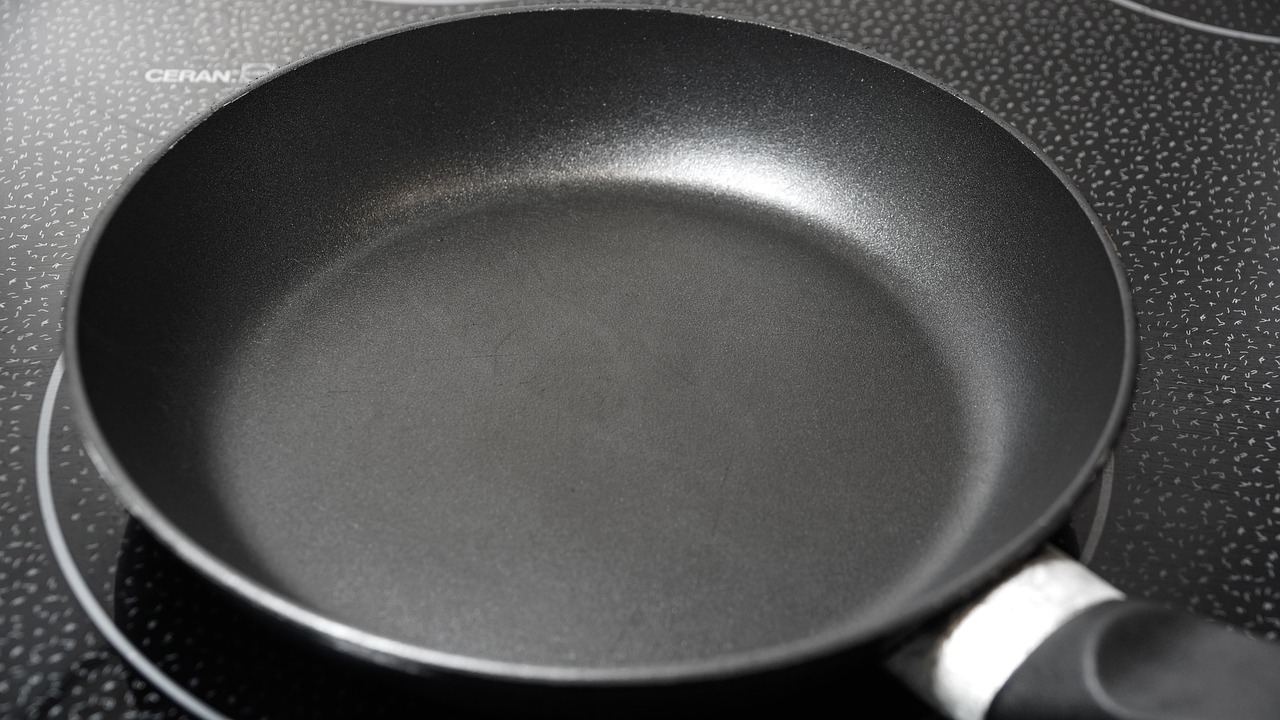
Nonstick pans feel like an everyday shortcut. Eggs slide, oil use drops, and cleanup takes seconds. But that convenience has a chemical backstory. Some nonstick coatings belong to a family called per- and polyfluoroalkyl substances, or PFAS. These compounds resist heat, oil, and water, which makes them useful in kitchens and factories. The Environmental Protection Agency describes PFAS as widely used, long lasting chemicals that build up in people and the environment. For home cooks, the central issue is not that all cookware is dangerous. The issue is understanding what actually moves from the coating to your food and at what dose. Science gives us a clearer picture than headlines often suggest.
The phrase PFOA-free appears on many boxes. But PFOA is just one PFAS compound. Its phase out in US manufacturing does not mean every modern pan is free of all fluorinated chemistry. The FDA regulates food contact materials and has conducted migration studies on nonstick coatings. Those studies generally find very little PFAS transfer when pans are intact and used at normal cooking temperatures. The picture changes when a pan is overheated, scratched, or repeatedly exposed to high heat. That is where consumer habit intersects with chemical risk. We need to separate the chronic, low level exposure from the acute fume events and the false claims on labels.
This article follows the evidence, not fear. It covers how PFAS enter cookware, how they migrate, what health agencies report, and how to choose safer materials. We also compare cookware to other PFAS sources, because your pan is rarely the biggest one. If you want immediate product guidance, see our PFAS-free cookware guide and our list of the best non-toxic cookware options. For the wider chemical story, we link to water, food storage, and air quality resources where relevant. By the end, you should know which claims matter and which are marketing noise.
What Are PFAS and Why Are They Used in Cookware?
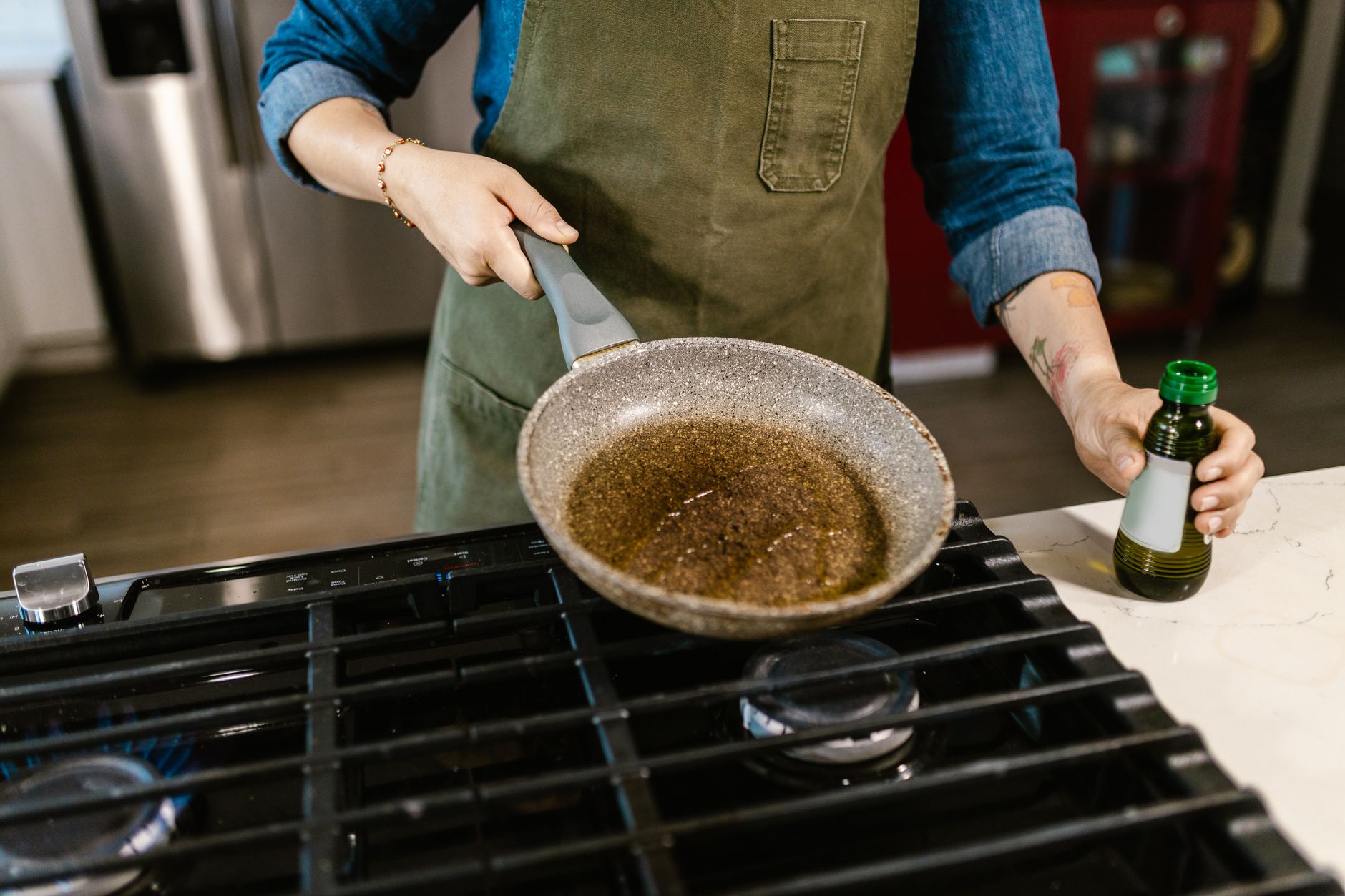
PFAS stands for per- and polyfluoroalkyl substances. The family includes thousands of synthetic chemicals built around a bond between carbon and fluorine. That bond is among the strongest in organic chemistry. It gives PFAS their stability, their resistance to heat and stains, and their persistence in the environment. These same properties earned them the nickname forever chemicals. They appear in food wrappers, water resistant clothing, firefighting foam, and some nonstick coatings. The Environmental Working Group maintains a consumer database of products where PFAS may hide, and our full primer on PFAS in cookware basics explains the chemistry in more detail.
In cookware, the main PFAS related material is PTFE, also known by the brand name Teflon. PTFE is a fluoropolymer, a very large molecule made from smaller fluorinated units. It is not the same as PFOA, but PFOA was historically used to make PTFE. Manufacturers phased out PFOA in the United States starting around 2006 after pressure from regulators and lawsuits. Today, most nonstick cookware in the US is PFOA-free. But some pans still use PTFE or other fluoropolymers, and replacement PFAS compounds may be present as manufacturing aids or trace impurities. The label PFOA-free does not automatically mean PFAS-free.
Manufacturers choose these coatings because they deliver a low friction surface that is easy to clean. They can withstand moderate heat and resist oil and water. That makes them attractive for home kitchens and food processing. But the tradeoff is that fluorinated chemistry does not stay neatly inside the coating forever. Under heat, abrasion, or acidic conditions, small amounts of PFAS can migrate into food. The FDA has set conditions of use for some food contact polymers, but those conditions assume typical cooking temperatures and intact surfaces. Push a pan beyond those bounds and the risk profile changes.
How Do PFAS Get From the Pan Into Your Food and Body?
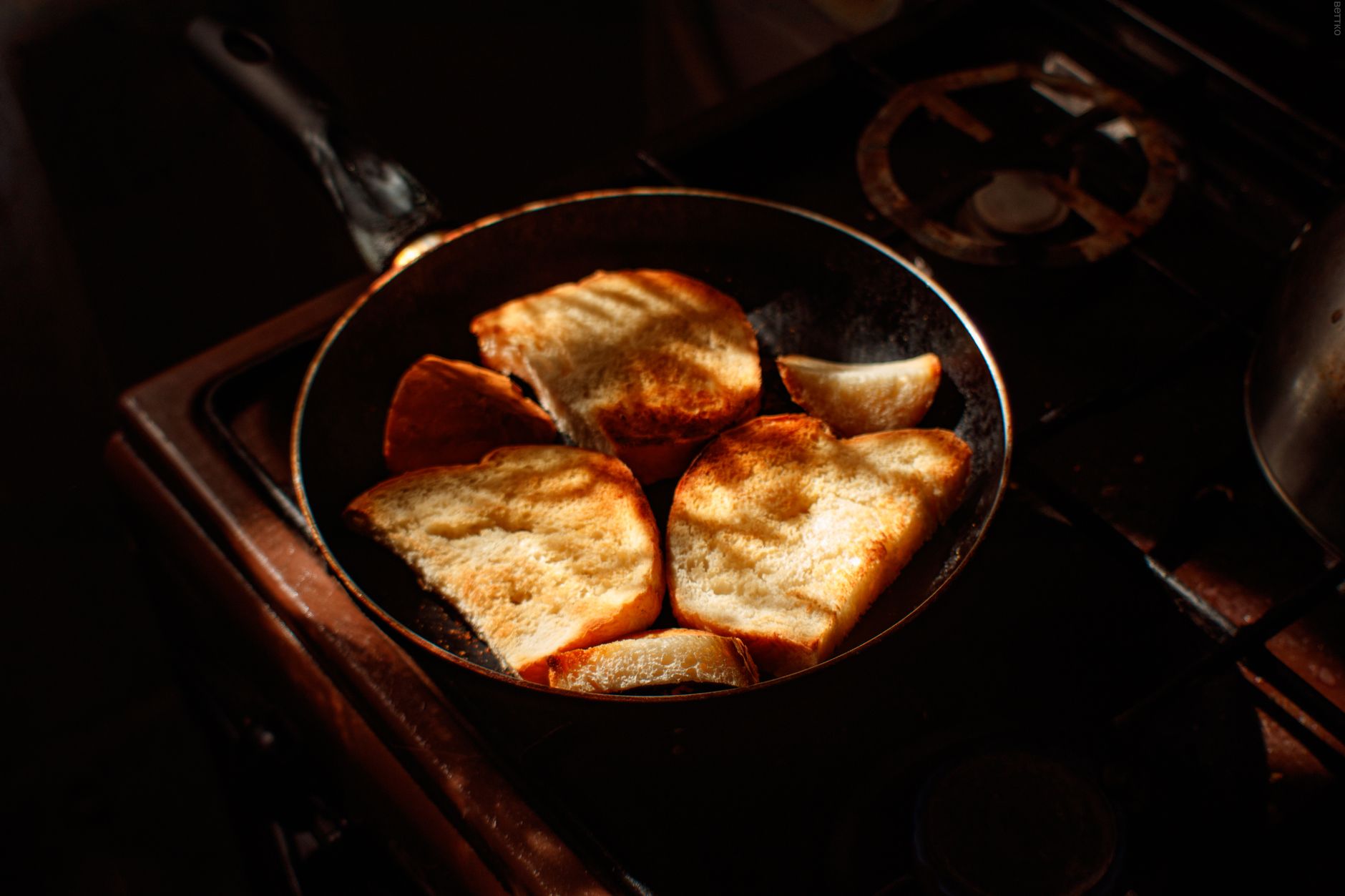
Normal cooking temperatures matter. The FDA has tested nonstick cookware under conditions that mimic home use. Those tests typically find very low migration of PFAS into food, often below detection limits. The concern begins when pans overheat. Nonstick coatings can begin to degrade above 500 degrees Fahrenheit, or 260 degrees Celsius. An empty pan on a high flame can reach that temperature in under a few minutes. Degradation can release fluorinated gases and particles. Some of those particles can settle into food or be inhaled. This is why bird owners have long been warned to keep birds out of the kitchen. The fumes can be fatal to pet birds at relatively low levels.
Repeated use also matters. Metal utensils, abrasive scrubbers, and stacking pans can scratch the coating. A scratched pan does not necessarily release large amounts of PFAS at normal temperatures, but it creates more surface area and can accelerate wear. Acidic foods like tomatoes or vinegar may increase migration over time. The body burden from cookware is usually smaller than the burden from contaminated drinking water, food packaging, and dust. The EPA set interim health advisories for two legacy PFAS in drinking water. PFOA is set at 0.004 parts per trillion and PFOS at 0.02 parts per trillion. These values are so low that they are measured in parts per trillion, which shows how little of these compounds may matter. For drinking water guidance, see our PFAS in drinking water explainer and water filters that reduce PFAS.
Centers for Disease Control and Prevention data show that most Americans have measurable PFAS in their blood. The CDC’s National Health and Nutrition Examination Survey has detected PFAS in around 97 percent of people tested. That does not mean cookware is the main cause. Teflon pan dust, water, and food packaging all contribute. But because PFAS accumulate over years, reducing avoidable sources makes sense. You can reduce migration by never preheating an empty nonstick pan, using low or medium heat, and replacing scratched pans. You can also focus on the biggest exposure source in your home by checking tap water reports and using a certified filter.
What Does the Research Actually Show About Health Risks?
Human studies on PFAS come mostly from workers and communities exposed to high levels through contaminated water. Those studies link certain PFAS to higher cholesterol, changes in liver enzymes, decreased vaccine response in children, and increased risk of kidney and testicular cancer. The International Agency for Research on Cancer classified PFOA as possibly carcinogenic to humans. These effects appear at much higher exposure levels than most people get from a nonstick pan. The cookware contribution is real but modest. For most households, contaminated drinking water or food packaging is a larger concern. Still, because PFAS persist in the body, every source matters.
The Environmental Protection Agency has been clear that some negative health effects may occur at very low levels of PFOA and PFOS in drinking water. The interim health advisories of 0.004 parts per trillion for PFOA and 0.02 parts per trillion for PFOS are far below what the agency used to consider safe. Those numbers are about water, not pans. But they signal the scientific shift toward caution. The FDA continues to evaluate PFAS in food contact materials and has found that most tested nonstick coatings release extremely low levels under normal use. The FDA also monitors the market for unauthorized PFAS in food packaging and cookware. For a broader look at reducing kitchen chemicals, see how to reduce microplastics at home.
There is also acute exposure to consider. Overheated PTFE can produce fumes that cause polymer fume fever in humans. Symptoms feel like the flu: chills, headache, fever, and chest tightness. The symptoms usually pass within a day or two, but the event signals that the coating has degraded. Repeated overheating can weaken the pan and increase long term migration. The practical advice is simple. Use nonstick pans for eggs and delicate foods only. Use stainless steel, cast iron, or carbon steel for high heat searing. That simple habit shift reduces both acute and chronic exposure.
Is Your Cookware Really PFAS-Free? How Can You Tell?
Label claims can be misleading. PFOA-free has become a marketing phrase, but it only addresses one legacy compound. A pan that is PFOA-free can still be coated with PTFE or made with other fluorinated processing aids. Some newer pans are labeled PFAS-free or fluorine-free, which is a stronger claim. However, there is no federal law that requires cookware makers to test every batch for total fluorine. A few states have stepped in. California passed a cookware disclosure law that requires manufacturers to identify PFAS in cookware sold online. That transparency helps, but it does not cover every pan in every state.
The most reliable approach is to ask the manufacturer directly. Ask whether the nonstick coating contains any fluoropolymers, including PTFE. Ask whether the pan has been third-party tested for total fluorine or PFAS. Total fluorine is a useful proxy because organic fluorine in a nonstick surface usually indicates PFAS chemistry. A third-party certification, such as from a lab that uses combustion ion chromatography, adds confidence. You can also read our PFAS-free cookware guide to see which materials and brands pass a stricter screen. We also explain why ceramic is not automatically PFAS-free and what to look for in test results.
Material matters more than label. Cast iron, carbon steel, stainless steel, and uncoated enameled cast iron do not need fluorinated nonstick coatings. They are your strongest baseline. Ceramic nonstick coatings are typically made from silica and other inorganic materials. If a ceramic pan is explicitly tested and labeled PFAS-free, it is a reasonable nonstick option. Do not assume every ceramic pan is free of fluoropolymers. Some manufacturers add fluorinated polymers to improve release. A quick email to customer support can clear this up. Also watch for vague phrases like eco friendly or green nonstick. They tell you nothing about PFAS.
Which Cookware Materials Are Safer Alternatives?

The safest choices are materials that never needed PFAS in the first place. Cast iron develops a natural seasoning that becomes nonstick over time. Carbon steel behaves similarly and weighs less. Stainless steel is non reactive and handles high heat well. Glass and enameled cast iron are also good for baking and braising. These materials are not always as convenient as a slick nonstick pan, but they last for decades and do not release fluorinated chemicals. If you want a full breakdown of top rated non-toxic options, see our best non-toxic cookware list.
Ceramic coated pans can offer nonstick convenience without PFAS. Look for pans labeled PFAS-free and free of PTFE and PFOA. Choose brands that publish third-party test results for total fluorine. Keep in mind that ceramic nonstick can wear faster than traditional nonstick. You may need to replace it every two to three years if you cook frequently. But the wear products are generally inorganic and less concerning than PFAS migration.
Use the right pan for the right job. If you need high heat searing, choose cast iron, carbon steel, or stainless steel. If you need gentle nonstick for eggs, use a PFAS-free ceramic pan at low or medium heat. Never preheat an empty nonstick pan. Add oil or food before you turn on the heat, or use a lower setting. Avoid metal utensils on all nonstick surfaces, even ceramic. Use wood, silicone, or bamboo. These habits reduce scratches and keep any nonstick pan safer longer.
- Cast iron: naturally nonstick when seasoned, no PFAS, lasts decades
- Carbon steel: similar to cast iron but lighter and faster heating
- Stainless steel: non reactive, safe for acidic foods, no coating
- Ceramic coated: PFAS-free if tested, avoid high heat and metal tools
- Enameled cast iron: no PFAS, excellent for braising and baking
Frequently Asked Questions
Are all nonstick pans made with PFAS?
No. Some nonstick pans use ceramic coatings that contain no PFAS. Traditional nonstick pans often rely on PTFE, a fluoropolymer that falls under the PFAS family. Look for pans labeled PFAS-free or fluorine-free and ask the manufacturer for third-party test results.
Does PFOA-free mean the pan is PFAS-free?
No. PFOA-free only means one legacy compound was removed. The pan may still contain PTFE or other replacement PFAS. Check for an explicit PFAS-free or total fluorine free claim before buying.
Can PFAS from cookware cause cancer?
Certain PFAS have been linked to kidney and testicular cancer in heavily exposed populations. Cookware contributes a relatively small share of total PFAS exposure for most people. Avoid overheating and replace scratched pans to keep that share low.
What temperature damages nonstick coatings?
Nonstick coatings can begin to degrade above 500 degrees Fahrenheit, or 260 degrees Celsius. An empty pan on high heat can reach that temperature quickly. Never preheat an empty nonstick pan.
Should I replace my scratched nonstick pan?
Yes. Scratches increase surface wear and may accelerate migration. Replace damaged nonstick pans with cast iron, carbon steel, stainless steel, or certified PFAS-free ceramic.
Are ceramic pans automatically PFAS-free?
Not always. Most ceramic coatings are inorganic and do not contain PFAS, but some may include fluorinated additives. Verify with the manufacturer or choose pans that publish third-party total fluorine tests.
What Should You Remember?
- Choose cookware made from cast iron, carbon steel, stainless steel, or certified PFAS-free ceramic.
- Replace scratched, flaking, or repeatedly overheated nonstick pans.
- Ignore PFOA-free alone; always look for PFAS-free or fluorine-free testing.
- Avoid high heat and never preheat an empty nonstick pan.
- Remember that drinking water is often a larger PFAS source than cookware; test and filter if needed.
- Trust EPA and FDA data: intact nonstick pans release very little under normal cooking conditions.
This article is for general information only and is not medical, legal, or regulatory advice. Chemical-safety claims and product choices should be verified against current scientific research and the guidance of relevant agencies (EPA, FDA, EWG, CDC). Always follow manufacturer instructions and consult a qualified professional for health or exposure concerns.